


 ©Yann Monel
 ©Yann Monel
 ©Yann Monel
 ©Atelier Bivouac
Pruning remnants* garden
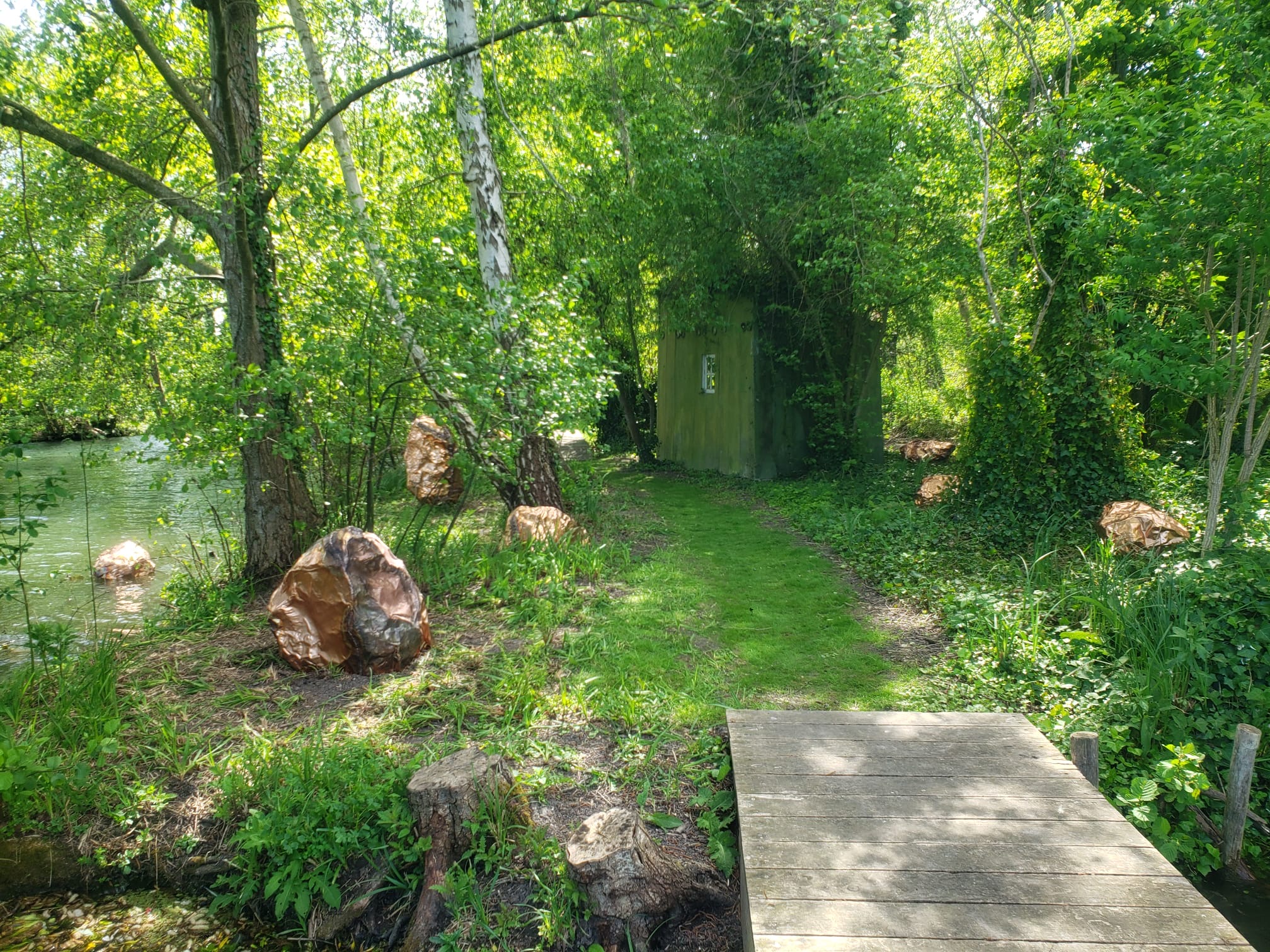
The Hortillonnages, a territory shaped by the gardening activity of its people, tell the story of the fragile bonds between a landscape and its inhabitants. Without regular human presence to maintain the banks of the islands against the vagaries of the climate, the edges erode and water reclaims ground from the land. It is this question, central to the Hortillonnages, of the perpetually shifting edge and its preservation over time to keep the land above water, that we have chosen to explore.
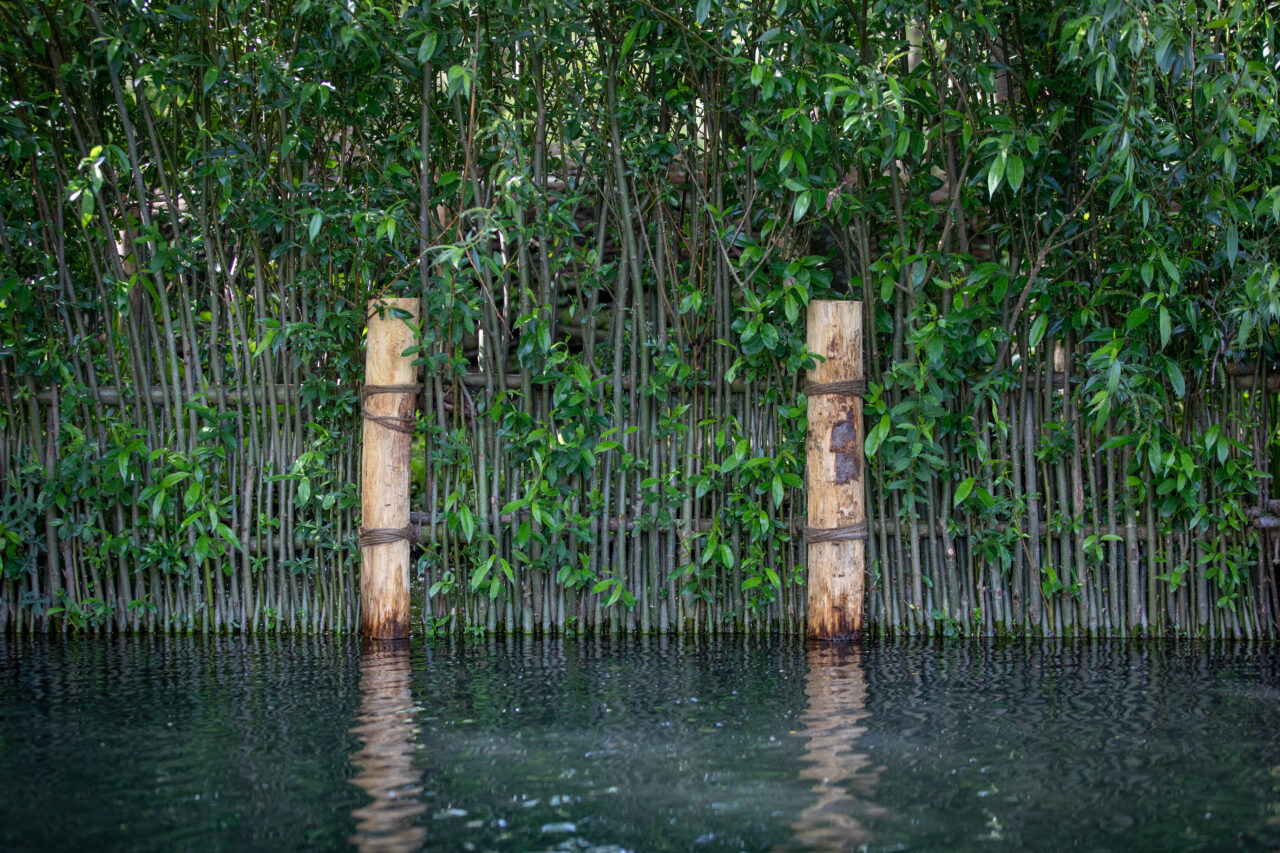
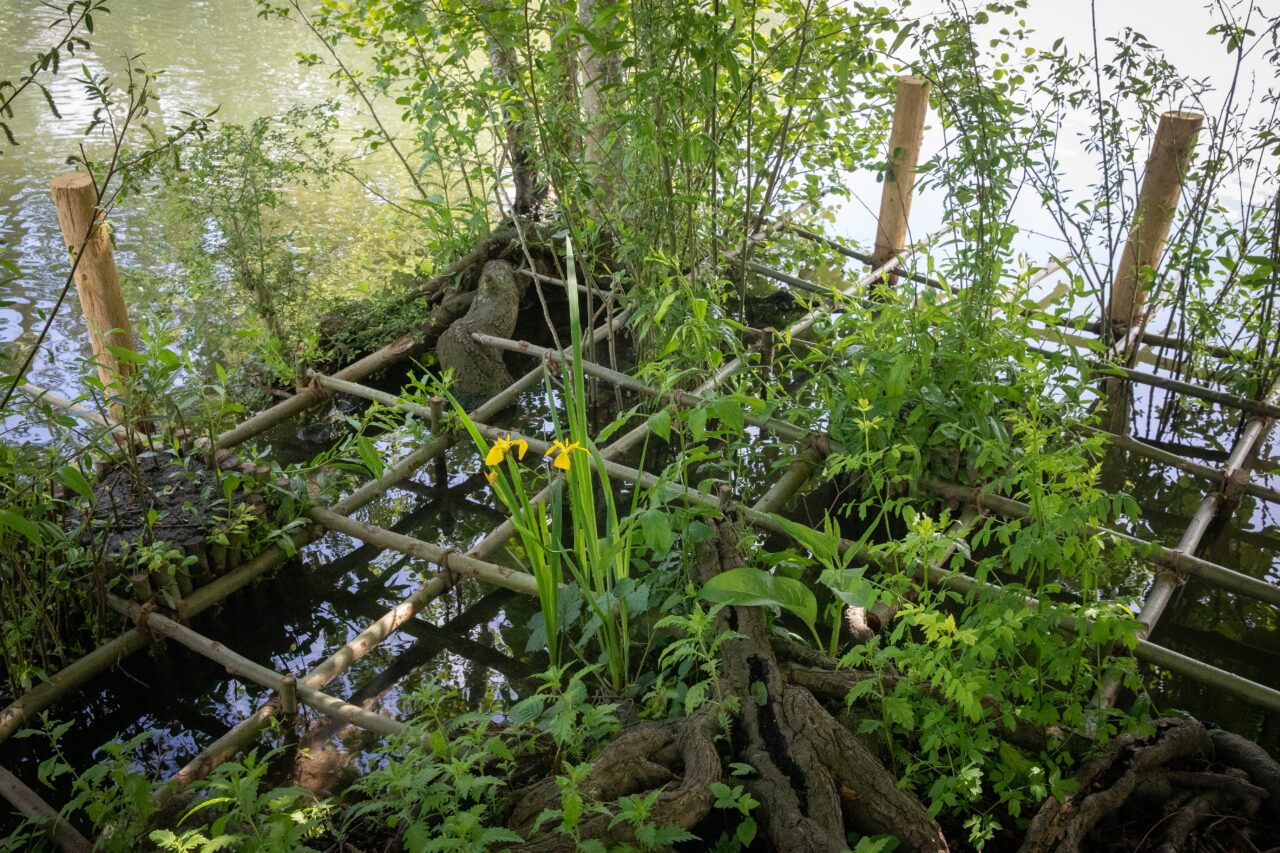
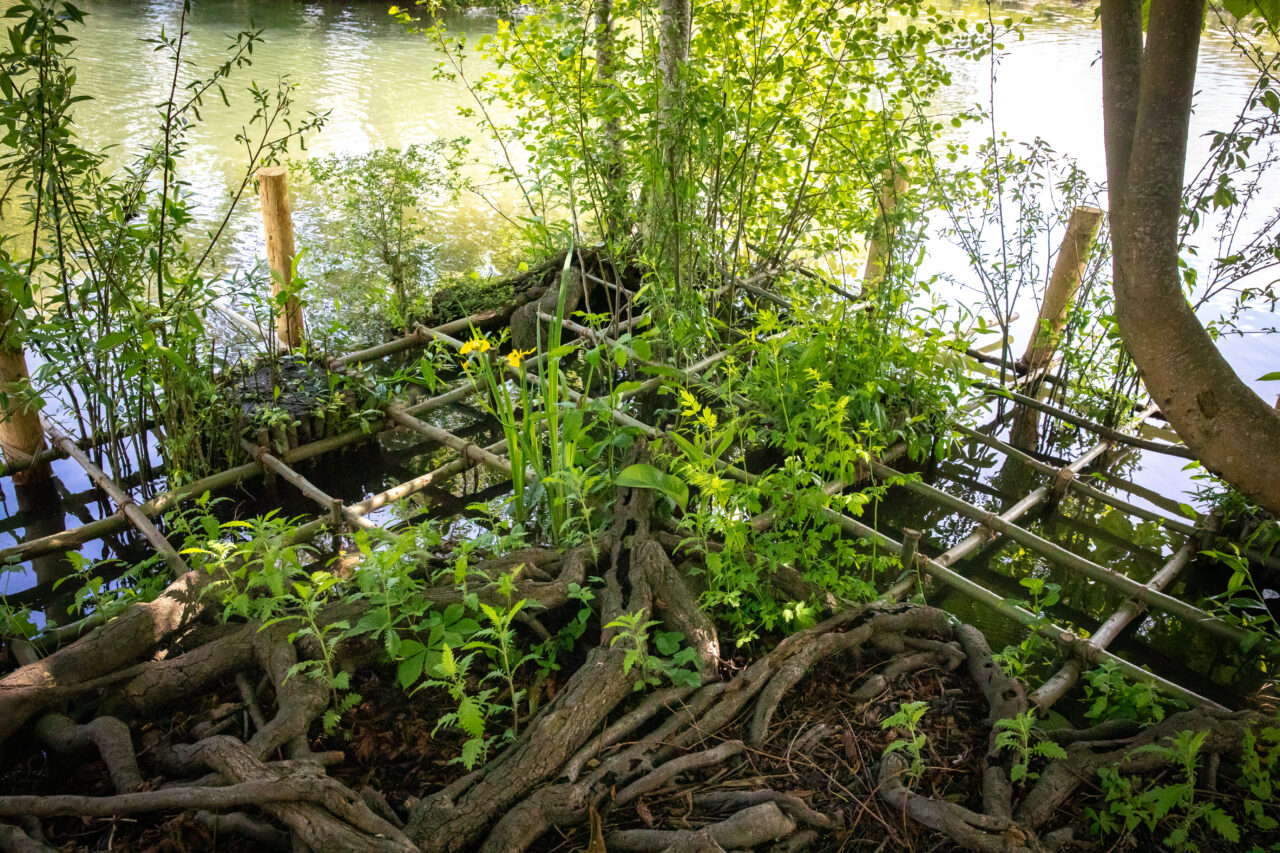
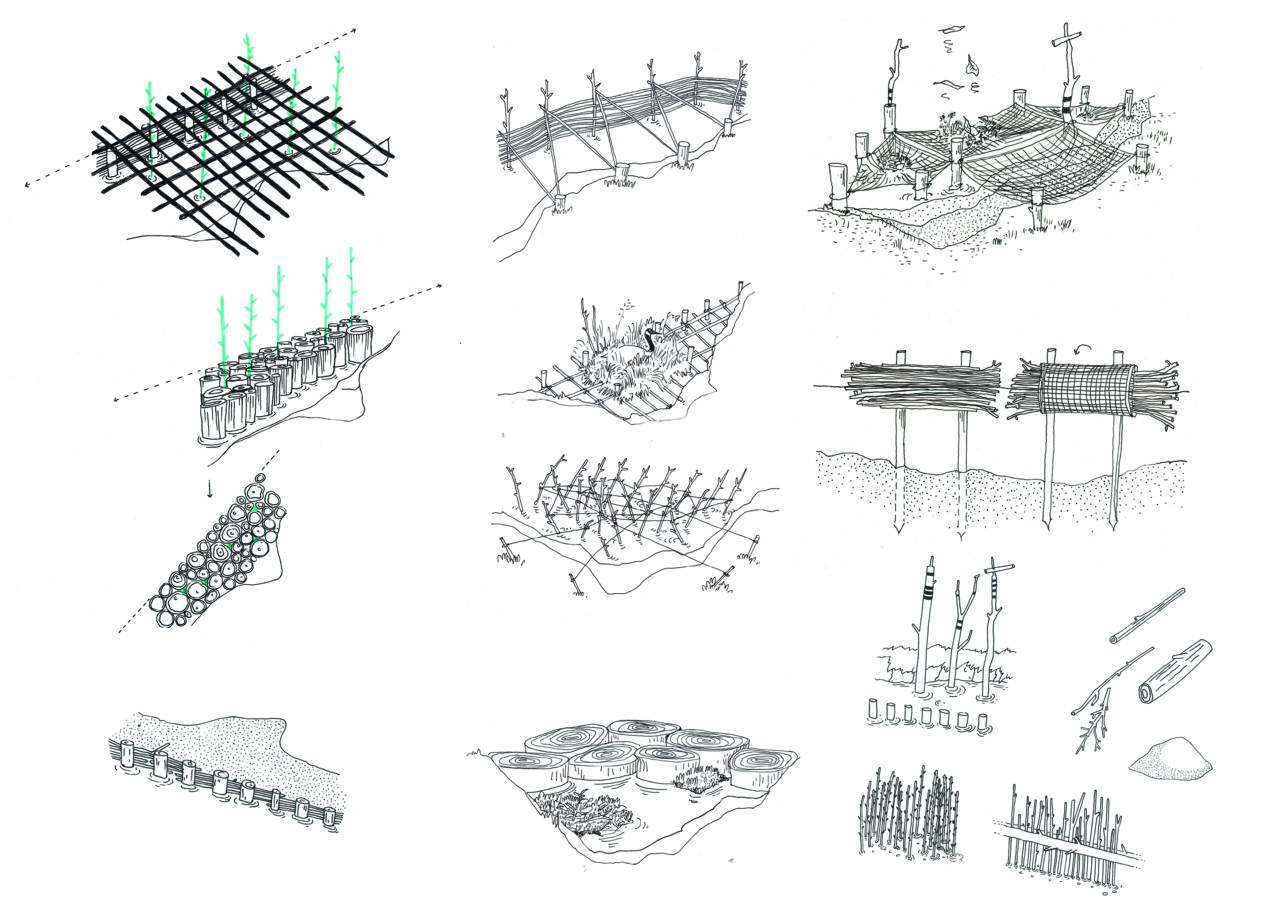
Pruning remnants* garden speaks of the making of the riverbank. Here, between the old and the new edge, a linear garden grows whose depth varies through the confrontation between the newly gained geometry won from the water and the limits of past erosion. The intervention treats the edge as thickness, as that hem between land and water capable of containing a garden.
Observing moorhens building their floating nests and seeking moorings in submerged branches or clusters of rushes, we see arrangements that are favourable to living things.
With the use of local resources at the heart of our practice, we wished to establish an inventory approach in order to identify the materials available for reuse on site. We work with matter produced by the maintenance of the Hortillonnages, the clearing of the islands and the dredging of the canals: assembling remnants gathered from the island during the management and gardening of spontaneous woodland, collecting wood from pruning carried out by plot owners and managers, and taking willow cuttings from the surrounding area.
The garden is therefore the product of assembled gleaned materials which, in the manner of parterres, give rise to patterns that vary according to the materials inventoried.
*Remnants are the branches left as waste after cutting.
Project realised with the support of Glenn Pouliquen, D.P.L.G. landscape architect