
International Garden Festival |
Hortillonnages Amiens 2023
Visit of the exhibition by boat


CAMON / PORT À FUMIER – Boat trip
Boarding pontoon
35 rue Roger Allou – 80450 Camon

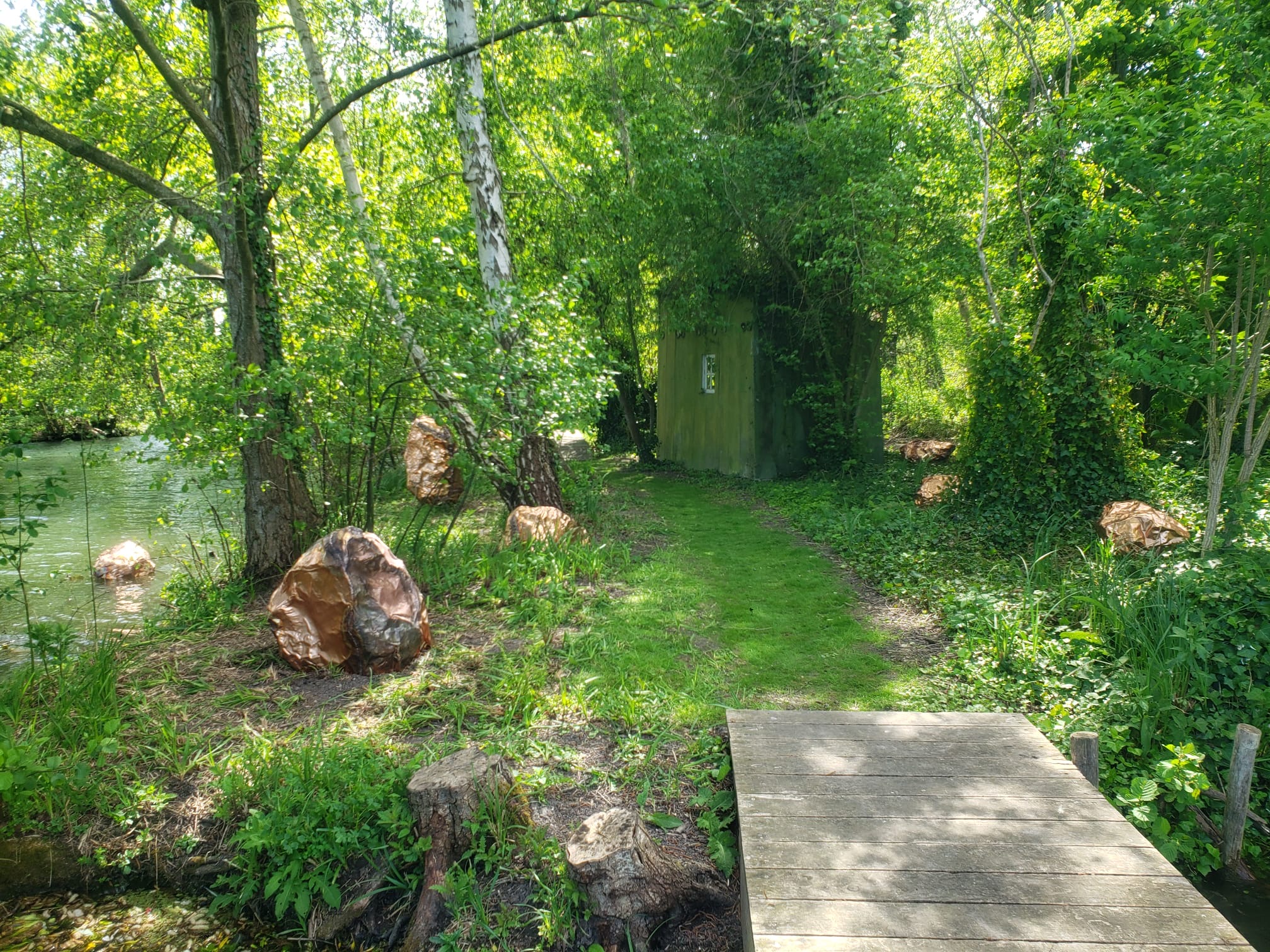
In CAMON, rent a boat for 2h30 and sail to the different plots invested around the pond of Clermont.

The rental price of a boat is based on the number of people, from 1 to 6 max. including child(ren) under 3 years old
* 20€ / 1-2 people. * 27€ / 3-4 people. * 32€ / 5-6 people. * free -3 years old
+ ASCO fee per person: €1 / 11 years and + * €0.50 / 3-10 years
>>> Only by online reservation
To read the terms and conditions of sale, click here
For security reasons, animals are not allowed in the boats. Strollers must be dropped off at reception.


We invite visitors to continue to respect barrier gestures in order to fight against the spread of COVID-19.
If you want more details, we invite you to consult the evolution of the reception instructions and the health rules in force on the government website: https://www.gouvernement.fr/info-coronavirus


For any request for information, you can send an email to communication@artetjardins-hdf.com
or call +33 6 78 53 55 92

Looking forward to welcoming you soon!

The team of Art & Jardins | Hauts-de-France

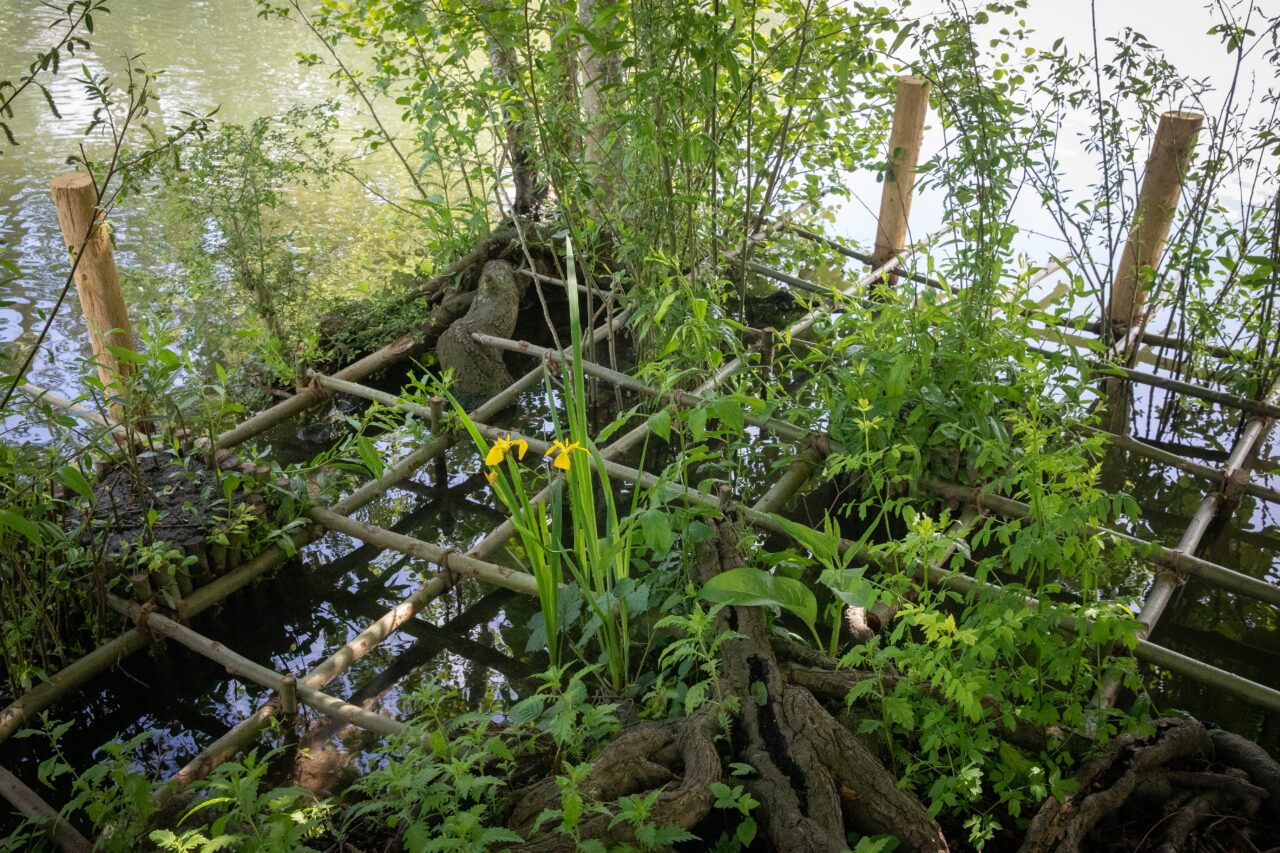
Pruning remnants garden – Atelier Bivouac, 2026

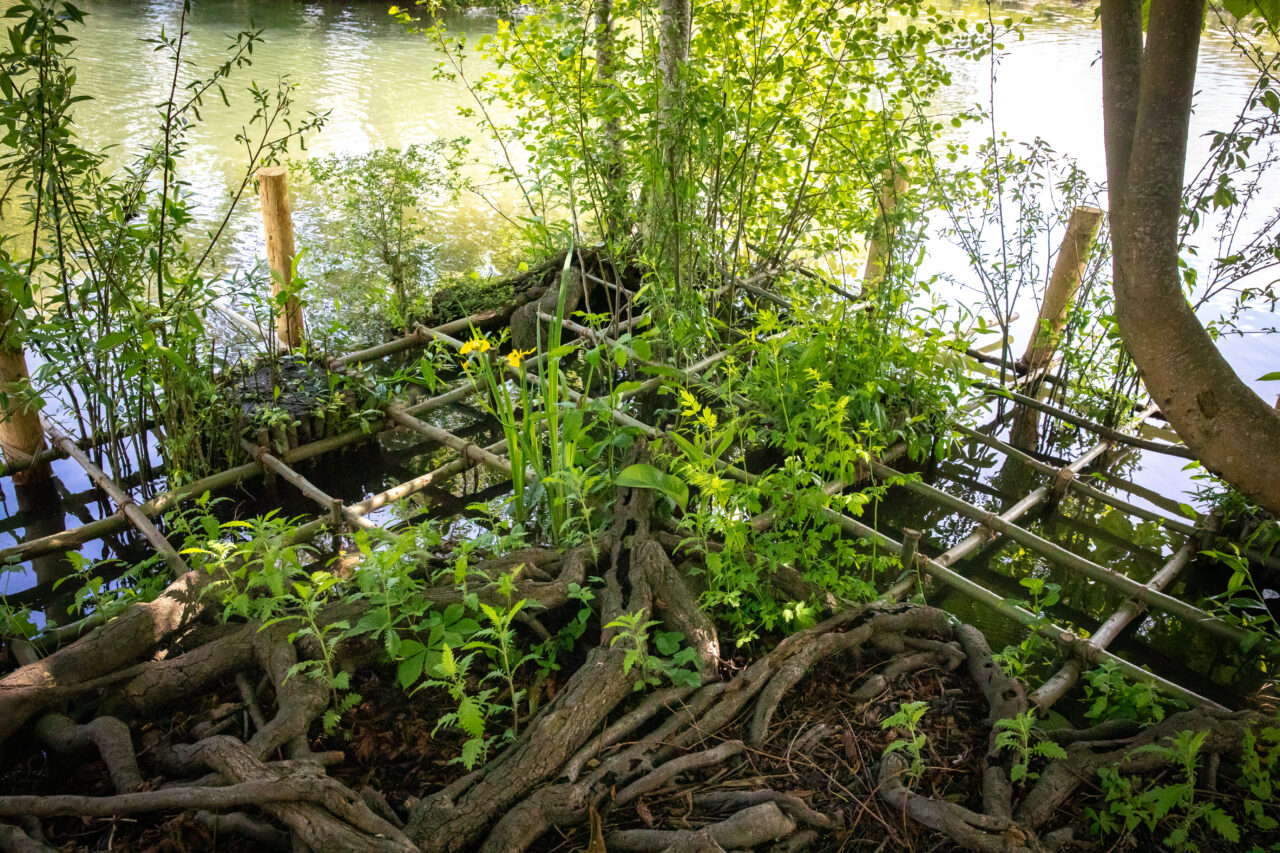
Pruning remnants garden – Atelier Bivouac, 2026
Wednesday May 6th, 2026 Zoé Gambier

©Atelier Bivouac

Pruning remnants* garden

The Hortillonnages, a territory shaped by the gardening activity of its people, tell the story of the fragile bonds between a landscape and its inhabitants. Without regular human presence to maintain the banks of the islands against the vagaries of the climate, the edges erode and water reclaims ground from the land. It is this question, central to the Hortillonnages, of the perpetually shifting edge and its preservation over time to keep the land above water, that we have chosen to explore.

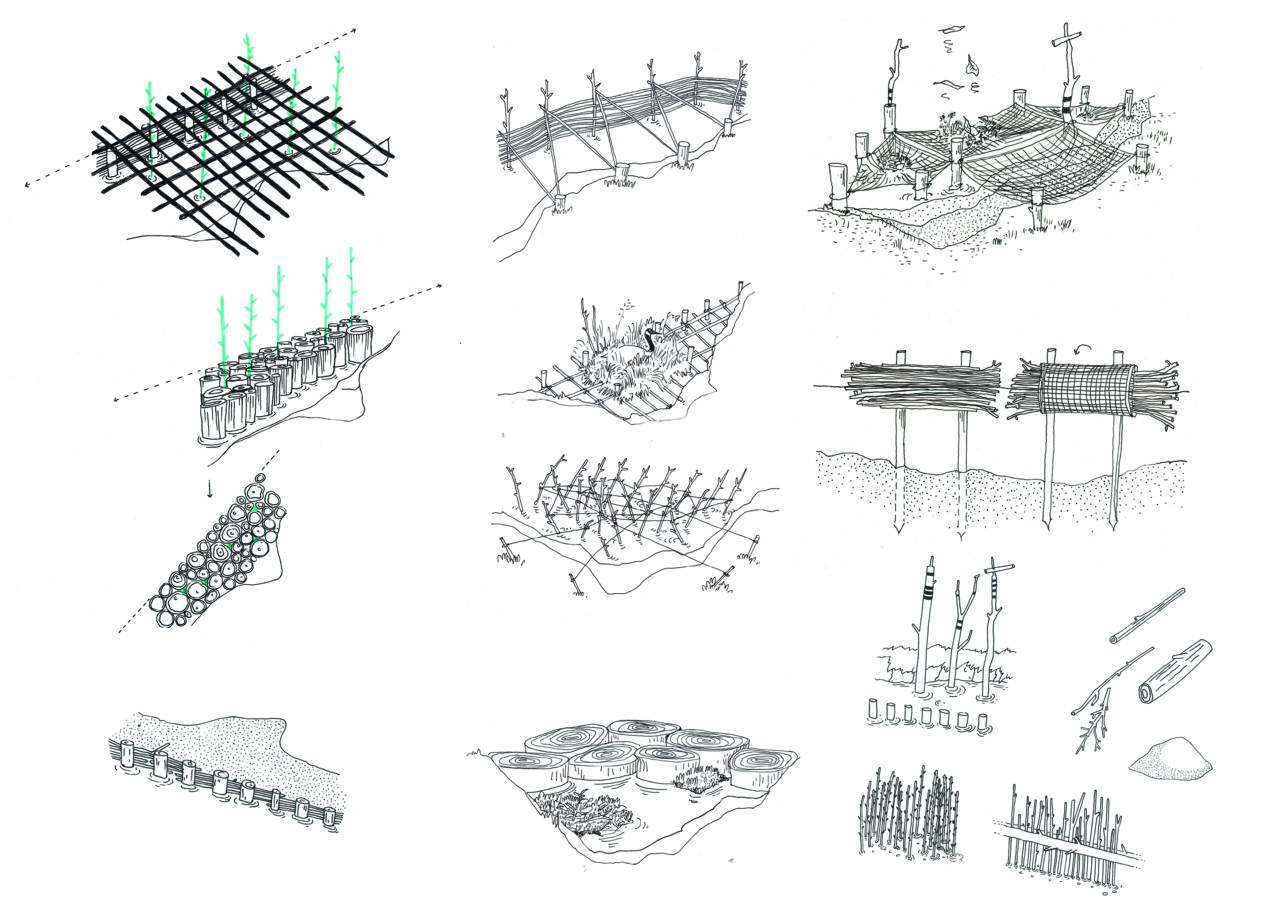
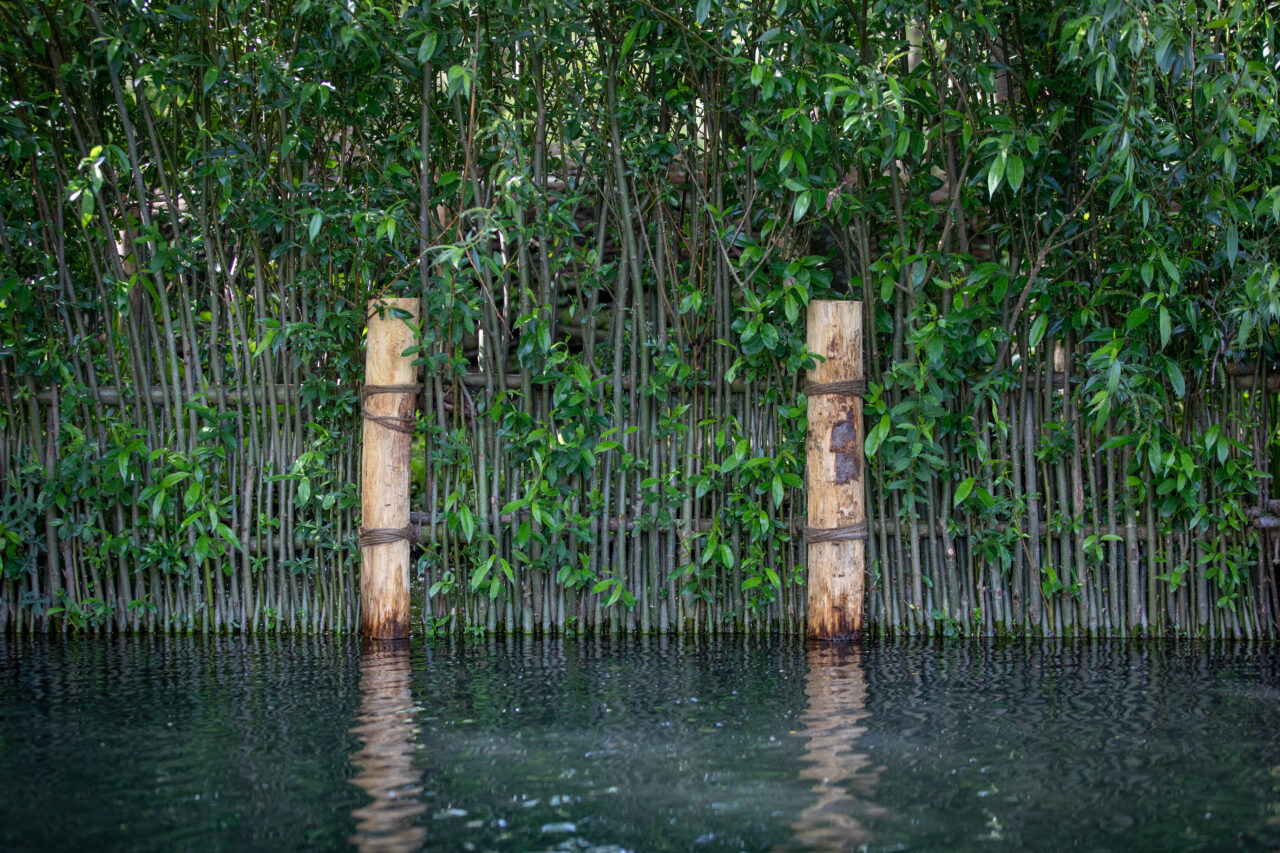
Pruning remnants* garden speaks of the making of the riverbank. Here, between the old and the new edge, a linear garden grows whose depth varies through the confrontation between the newly gained geometry won from the water and the limits of past erosion. The intervention treats the edge as thickness, as that hem between land and water capable of containing a garden.

Observing moorhens building their floating nests and seeking moorings in submerged branches or clusters of rushes, we see arrangements that are favourable to living things.

With the use of local resources at the heart of our practice, we wished to establish an inventory approach in order to identify the materials available for reuse on site. We work with matter produced by the maintenance of the Hortillonnages, the clearing of the islands and the dredging of the canals: assembling remnants gathered from the island during the management and gardening of spontaneous woodland, collecting wood from pruning carried out by plot owners and managers, and taking willow cuttings from the surrounding area.

The garden is therefore the product of assembled gleaned materials which, in the manner of parterres, give rise to patterns that vary according to the materials inventoried.

*Remnants are the branches left as waste after cutting.

Project realised with the support of Glenn Pouliquen, D.P.L.G. landscape architect

The artist

Atelier Bivouac : Léo Pouliquen, Matthieu Véron, Camille Molle

Atelier Bivouac is a collective of landscape designers from the École du Paysage de Versailles, based between Ardèche and Finistère. We are brought together by a shared aspiration: to explore new ways of designing public space projects through experimentation and the physical experience of territory, by living here and now. Through our attention to what is already there, through inventory work, and by deliberately positioning ourselves within an economy of means, we make use of existing resources, following a logic of reuse, recycling and frugality. Our design practice is grounded in an immersive approach: we propose to inhabit the site of a commission for a period of time and to set up an open-air workshop within it. This presence in the field allows us to understand the needs and aspirations of those who live in and animate these territories, in order to formulate and build a response that is appropriate, singular and considered. Our work takes shape principally in rural territories. contact@atelierbivouac.com Ardèche office: 200 allée du Moulinage, 07380 Chirols Finistère office: 38 rue du Pont, 29470 Plougastel-Daoulas
Voir la fiche artiste — Atelier Bivouac