


 ©Collectif Et puis
The landscape of Hortillonnages is tied to the echo of farmers, with their labor and care for the soil, as well as the beauty of the ornamental gardens designed in present times. The Garden of Compost attempts to reveal the history that shaped the Hortillonnages in the context of the present situation, while also imagining a future where productive and ornamental spaces are joined together.
As a central feature of the garden installation, we envisioned a pavilion of compost, informing visitors about the cycles, human care, and productive and decorative characteristics of the site. The garden and the compost are two parts of one whole, as they sustain each other.
Past versus present, productive or decorative landscape ?
Together with the development of industrial agriculture, the idea of what a garden represents and how it looks has been shifting. The gardens of Hortillonnages are a great example of this motion. Traditionally they are an area created by the secular labor of market gardeners, supplying food to the whole city and nurturing the soil by the knowledgeable maintenance of their plots. The present situation stands in contrast to this, as the site largely serves as a place to relax and recreate outside productivity. Ornamental gardens are a popular tourist attraction with many aesthetic qualities, but in these, the intensive maintenance and the practice of gardening care is lost. To us as designers, this contradiction was an interesting space to work in. Are productive and ornamental necessarily in contrast to each other? We started to imagine a garden where vegetables and organic soil are used as ornaments and celebrated.
Waste transformed into social ties.
Whether the main purpose of the garden is production or decoration, the garden is always rooted in soil conditions and maintenance. The Hortillonnages tell a story of human labor tied to the landscape through cycles, of soil being the key to the landscape, and about the gestures of the people who worked here. We wish to reveal these stories and cycles through the design of a compost pavilion. Compost is usually a small part of any garden, hidden in a corner and rarely talked about. By making it a central element of the garden and highlighting the processes and human care required to maintain a healthy compost, we want to propose a vision of future care that takes a strong foundation in the past.
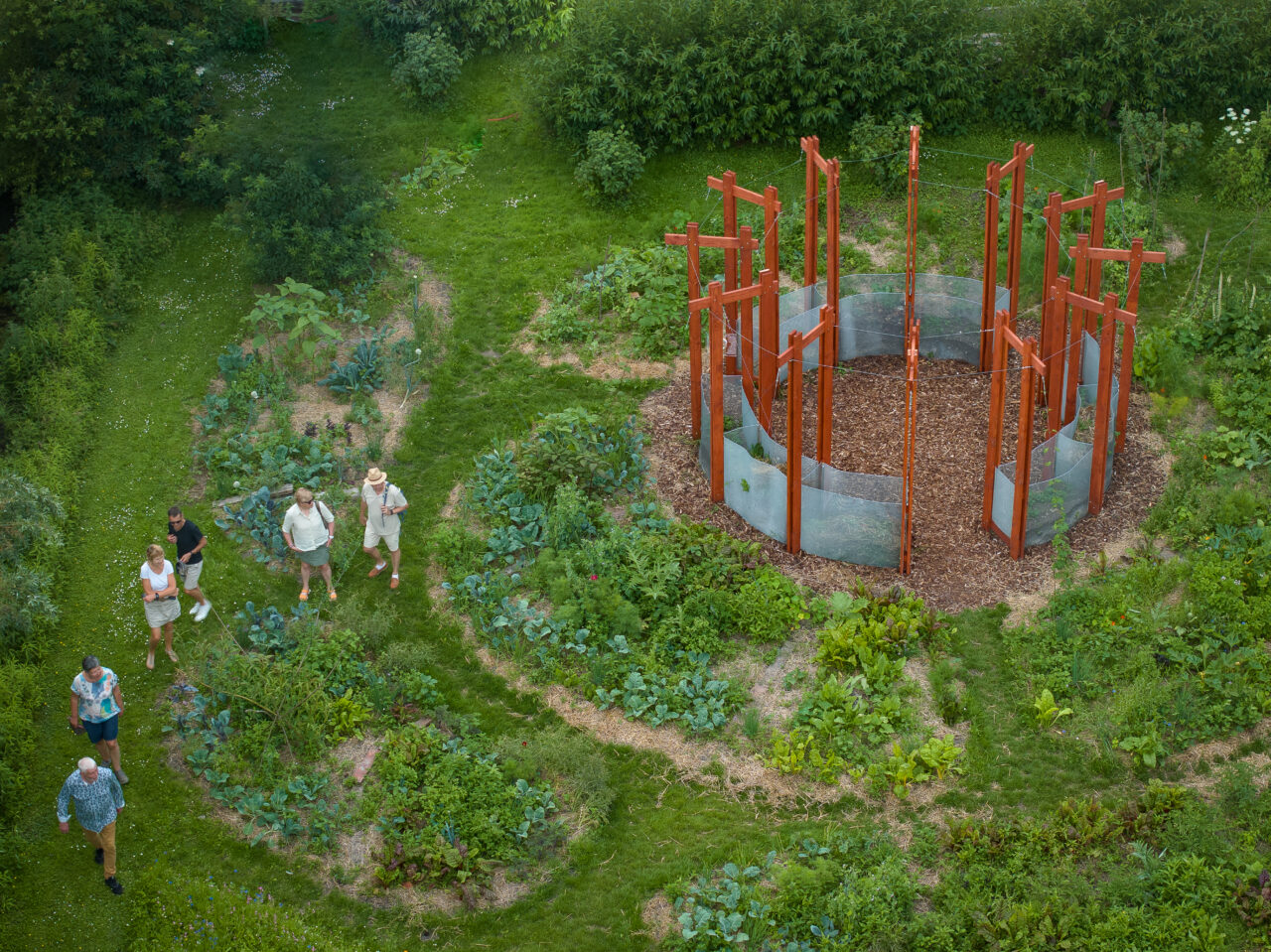
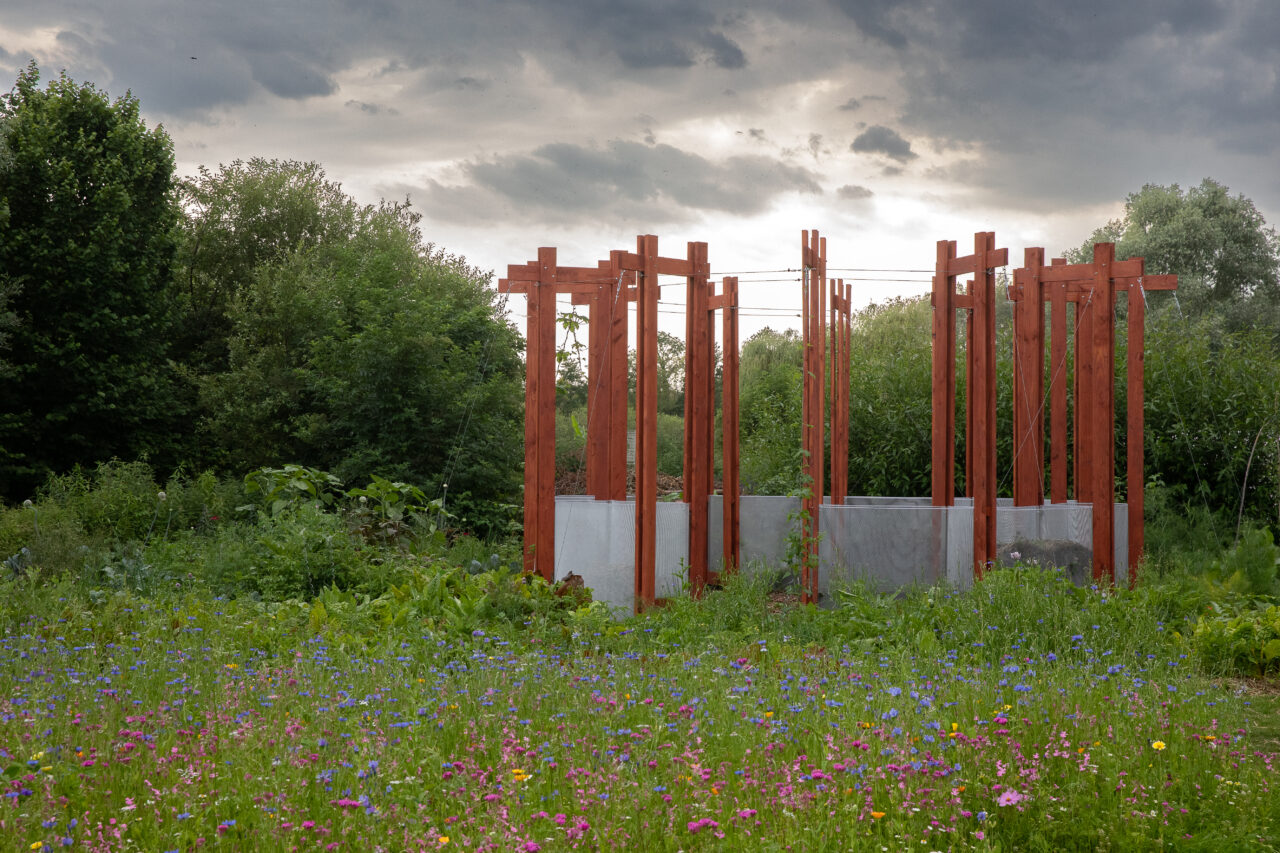
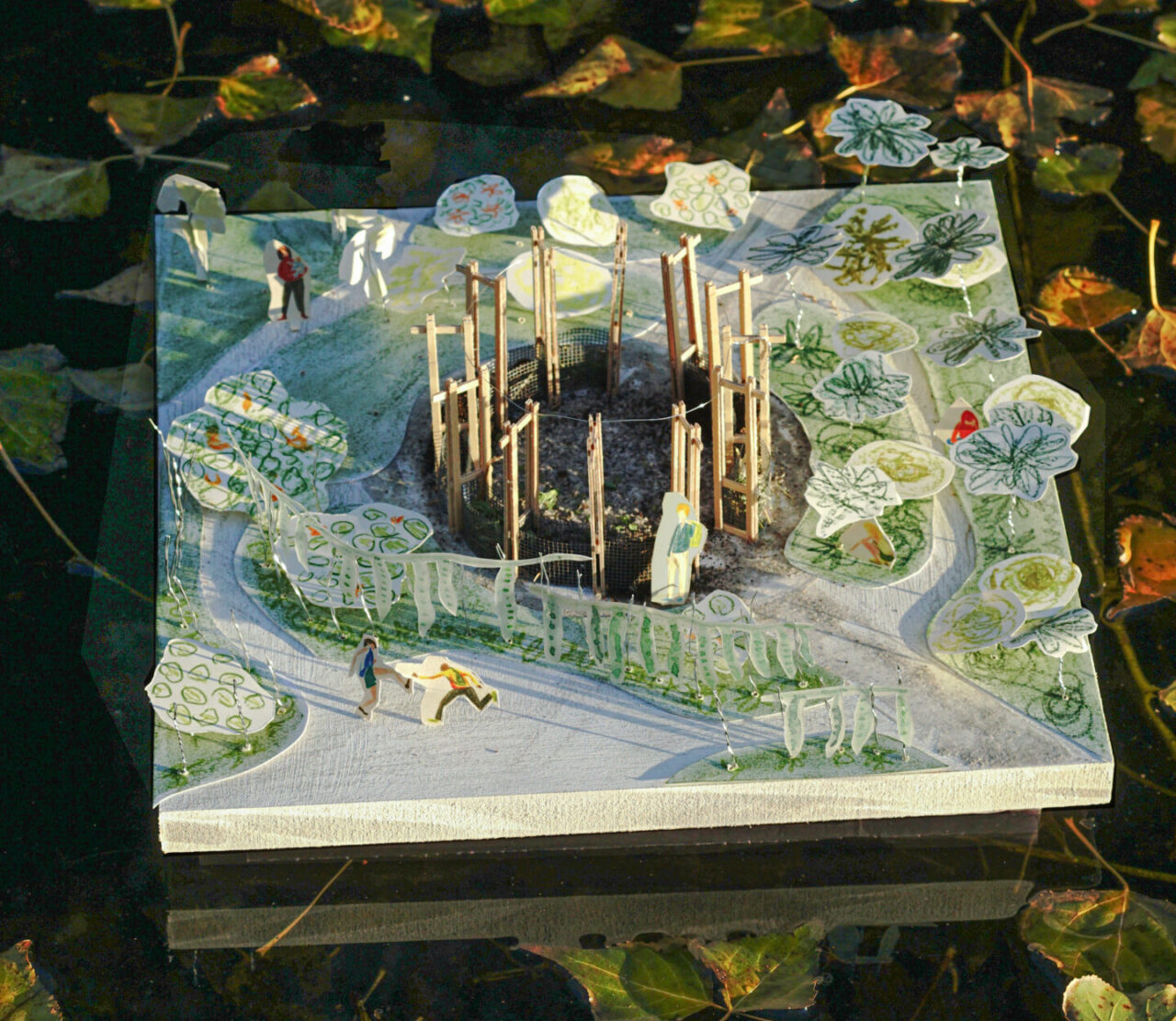
The compost pavilion simultaneously feeds the garden and is fed by the garden. It serves as a refinery of waste into food and social ties. At the heart of the garden, its round shape represents the cycle of the organic soil. The design is oriented around a 3-year cycle of compost, with three compost compartments forming one entity each. One of the three is being filled, one is processing in that year, and the other one can be emptied and used to feed the garden with nutrient rich soil. The compost compartments made out of steel mesh allow the visitors to experience the compost and its processes with all their senses. The mesh is inserted between a wooden construction, held together by steel cables that allow at the same time plants in the garden to reach high and climb over the pavillion, providing shade and a feeling of inside and outside.
The ornamental edible garden.
We have planted medicinal and herbal flowers, leafy vegetables and plants with edible fruits growing next to each other in an ornamental form. The composition of plants allows for a healthier ecosystem, where diverse plants benefit from each other through attraction of pollinators or stronger resilience to threats. We have designed the planting scheme of the garden to nourish the compost, balancing a healthy mix of green and brown matter the compost requires. Several elements formed by the plants create a different atmosphere and experiences for the senses, such as forest of cabbages or structures overgrown by peas.
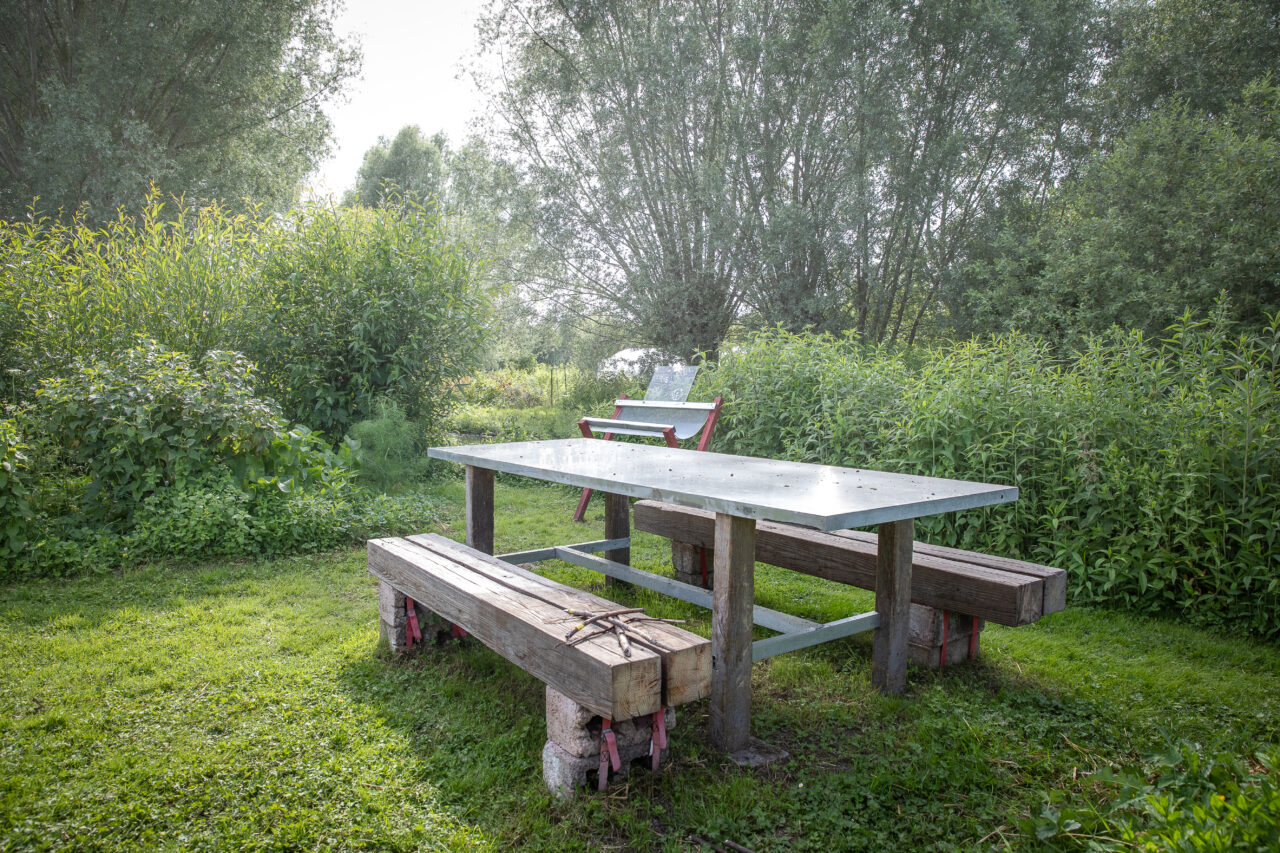
Finally, a picnic table by the water stands as a symbol of rest needed after a good work in the garden.