


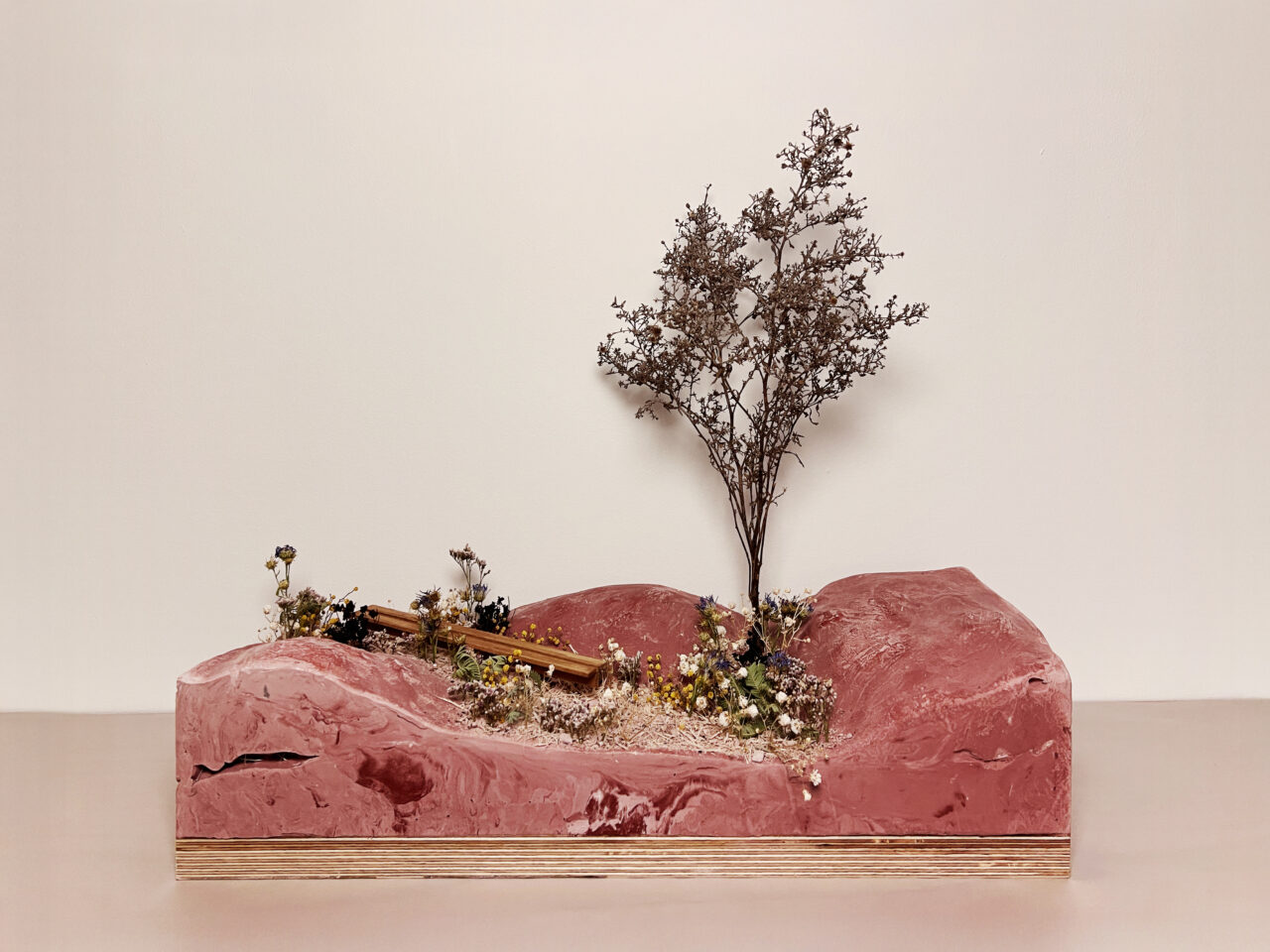
 ©Openfield, Manu Vanderveken et Pauline Cap
Twenty-five years after the Somme floods of 2001, this project proposes the creation of a landscape memorial dedicated to the memory of the floods that left a profound mark on the territory and its inhabitants. Of exceptional scale, these inundations provoked panic and devastation, erasing in a matter of days years of work and attachment to the land. Although measures have since been put in place to better understand and anticipate hydrological events, the memory of what occurred remains vivid and continues to shape the relationship with the environment.
Through an artistic and contemplative approach, the project seeks to inscribe this memory within the landscape, not as a fixed scar, but as a space of transmission and resilience. Where some towns have transformed their floods into cultural landmarks, the aim here is to offer a local and poetic reading of the relationship with water. The Hortillonnages of Amiens, shaped since the Middle Ages by patient adaptation to fluctuating water levels, embodies this complex relationship between production, landscape and aquatic environment.
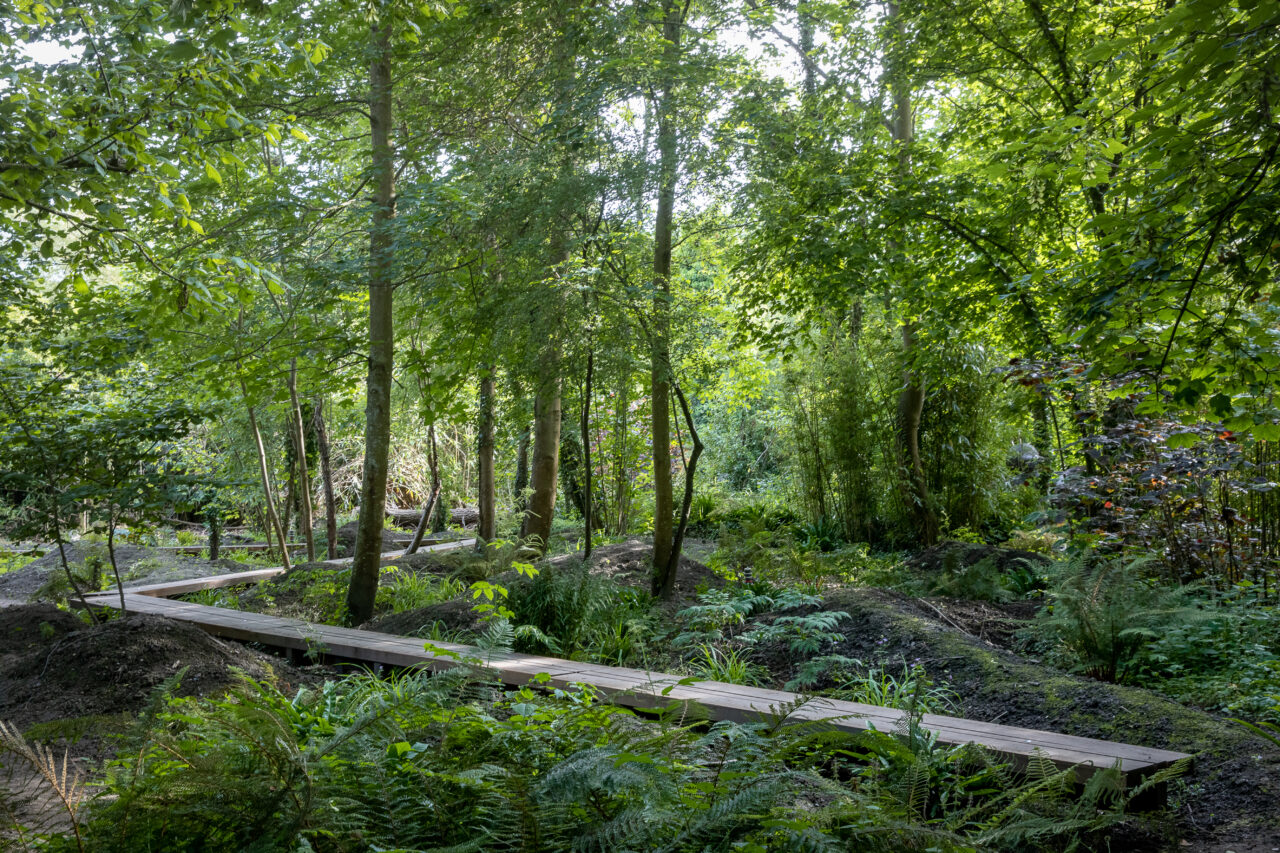
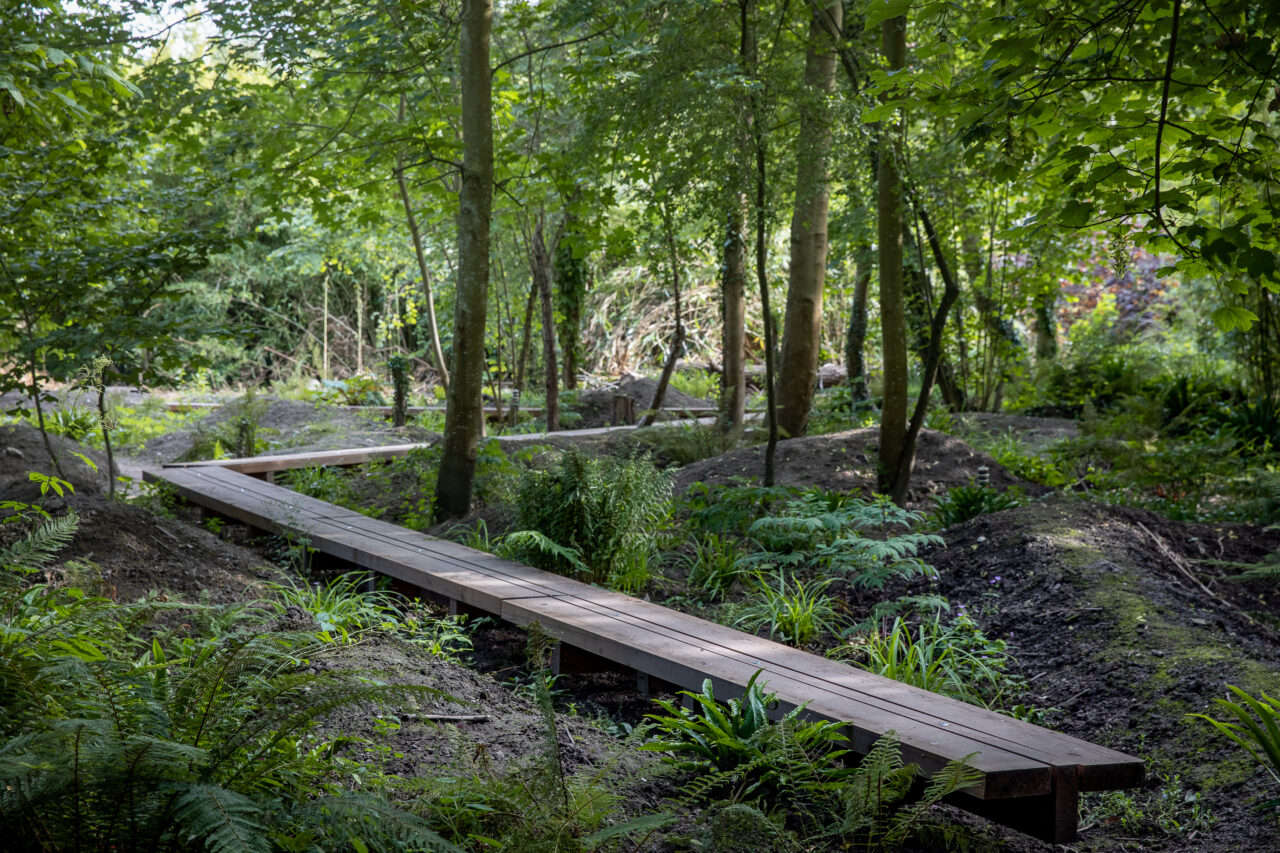
The intervention takes the form of a landscape installation articulated around three gestures. A raised pontoon forms the central element. Inspired by the makeshift walkways built by flood victims, it becomes a physical and sensory landmark, giving material form to collective memory. Beneath and around it, a horizontal line runs through the landscape. Made tangible by a dense and generous layer of vegetation, combining ferns and perennials in a varied palette, it symbolically evokes the invisible presence of water, like a persistent trace inscribed within the site. Finally, gentle embankments redraw the topography and contrast with the planted ground. Together they compose a miniature valley: a fertile, living hollow bordered by more pronounced slopes, suggesting the relief of a landscape in reduced scale.
The whole is conceived according to an ecological and frugal approach, using bio-sourced or reclaimed materials alongside indigenous plants. Designed as semi-permanent, the installation may evolve or be dismantled, with certain plantings intended to establish themselves durably within the site. At the intersection of architecture, landscape and scenography, the project questions the relationship between society and nature. To mark a symbolic flood level is to recognise water as an active force in the making of landscape. The memorial thus gives visible form to a presence that is too often overlooked, bringing it into shared space. The pontoon, which visitors may cross, offers a sensory experience poised between balance and contemplation.
Carried by a team of landscape architects involved throughout the process, the project is realised in a spirit of restraint and local collaboration. By giving material form to the memory of the water level, this work acts as a spatial and temporal marker connecting past, present and future. More than a commemoration, it is an invitation to consider our adaptation to climatic change and to learn to compose with uncertainty.