


 ©Sophia Amrouche & Flore Chantraine
 ©Sophia Amrouche & Flore Chantraine
 ©Sophia Amrouche & Flore Chantraine
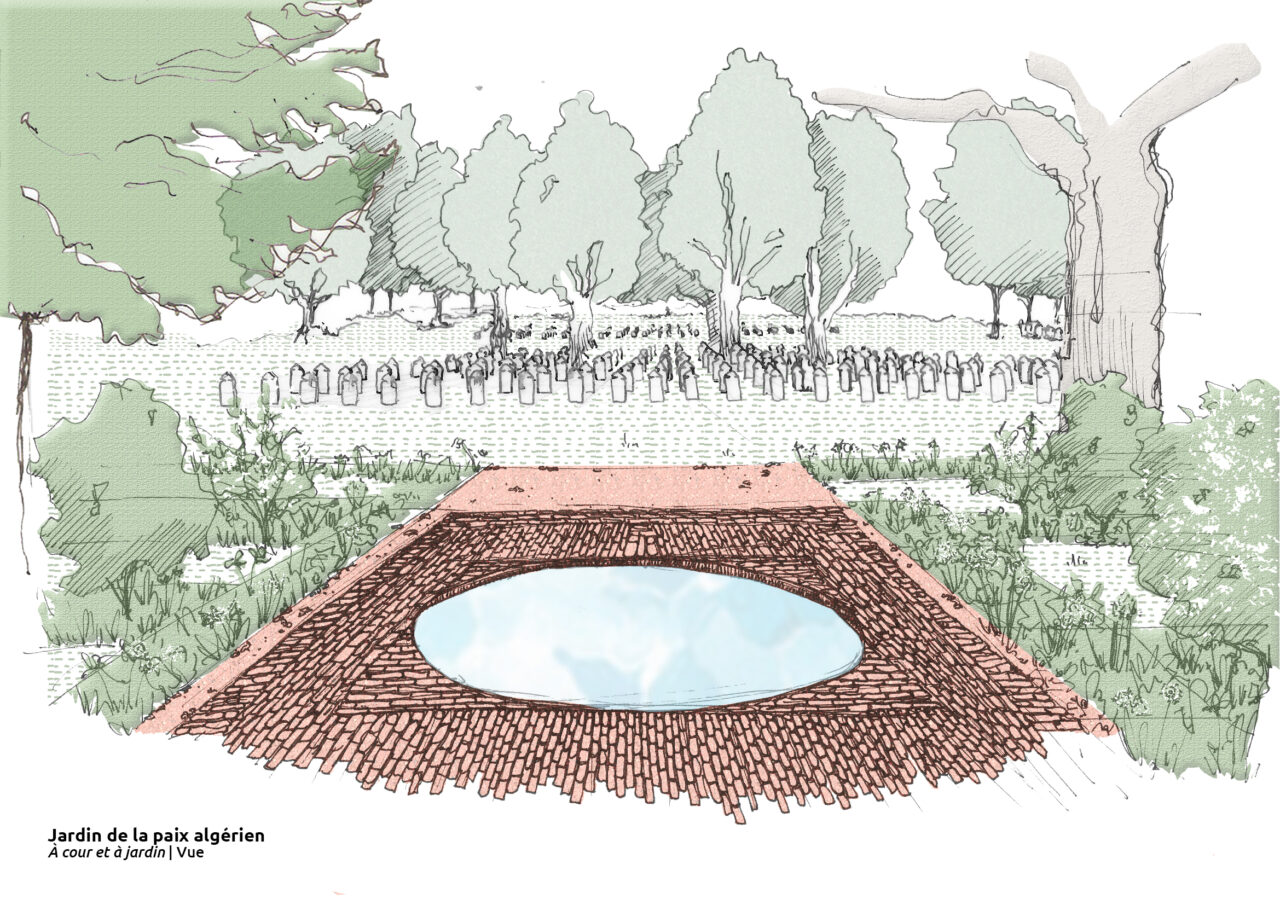
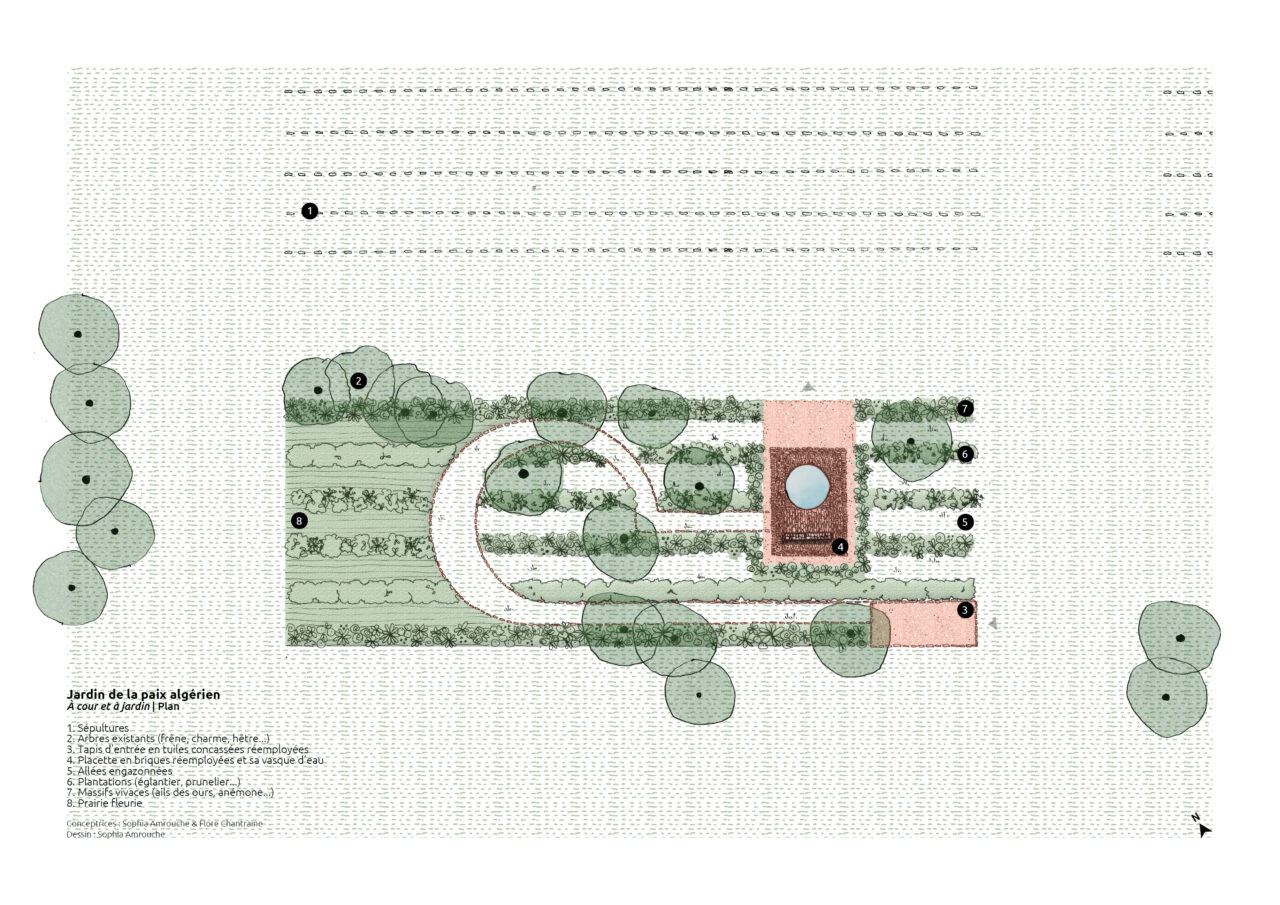
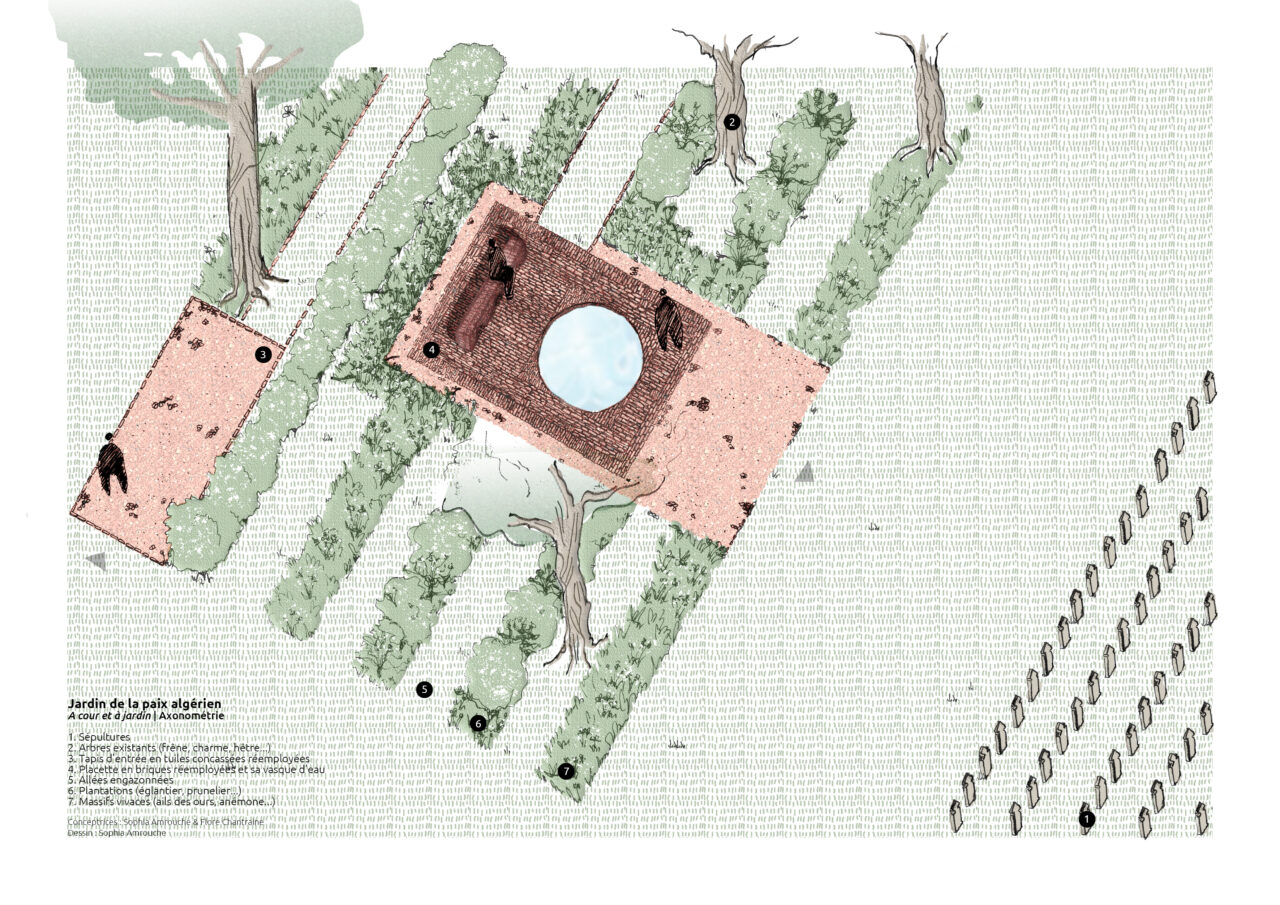
Beyond the village centre, on the heights above Montauville, lies the national war cemetery known as Le Pétant. It honours the soldiers who fell during the First and Second World Wars. The graves, silent and luminous, stand in rows of even lines in which peace and equality seem to prevail. These white, parallel lines follow the slope down to the entrance, as though reaching out towards the visitor. Below, the peace garden takes its place, carrying this pattern forward. This planted fabric of straight, white, parallel lines — sometimes cultivated, sometimes spontaneous — is interrupted here and there by an existing tree. The alternation between grass walkways and planted rows is a poetic metaphor for the trenches of the Great War, where Algerian and French soldiers supported one another in a common cause. Two cultures, two continents, two countries, two languages, and a friendship at peace that the project seeks to affirm.
Like a doormat, the bed of reclaimed crushed roof tiles invites a rite of passage. Rather than removing one’s shoes, as one does on entering a sacred place, here they are dragged across the tiles, which knock together underfoot. Once purified, the visitor is invited to wander along the main path.
On the “garden” side, the planted rows are free and spontaneous, given over to biodiversity so as to become a true cradle of life. To encourage this, the choice of species focuses on nectar-rich flowers and berries edible for birds and other wildlife. The garden is dressed mainly in white through the seasons, a symbol of peace — and present as such in the Algerian flag.
On the “courtyard” side, the rows are more formal, in the spirit of the French garden: here a bed of perennials — columbines, anemones — there plantings of dog rose and blackthorn. At its heart lies a small paved square of reclaimed brick. Like the courtyards of the Algerian houses that some soldiers left behind for the fighting, this place of gathering and intimacy crystallises remembrance, encounter and communion. The outline of these dwellings is traced on the ground, with a water basin at its centre. A mirror of our consciences and a vital resource, it can be contemplated seated or lying on a terracotta bench decorated with North African motifs. The material was chosen in reference to earth in all its senses: the cause of battles, a symbol of belonging and rootedness, but also the substance that lined the walls of the trenches where soldiers sometimes lived for years.